Car seats are ready to use after car upholstery cleaning when the cleaned fabric and accessible seams are dry, not simply when the appointment ends. There is no single drying time that applies to every seat: cleaning method, retained moisture, airflow and humidity change the result. Plan a separate drying window after wet cleaning, and ask your detailer whether the seats are ready before you drive away.
- Car upholstery cleaning ends before wet seats necessarily finish drying; check fabric, seams and cushion edges before use.
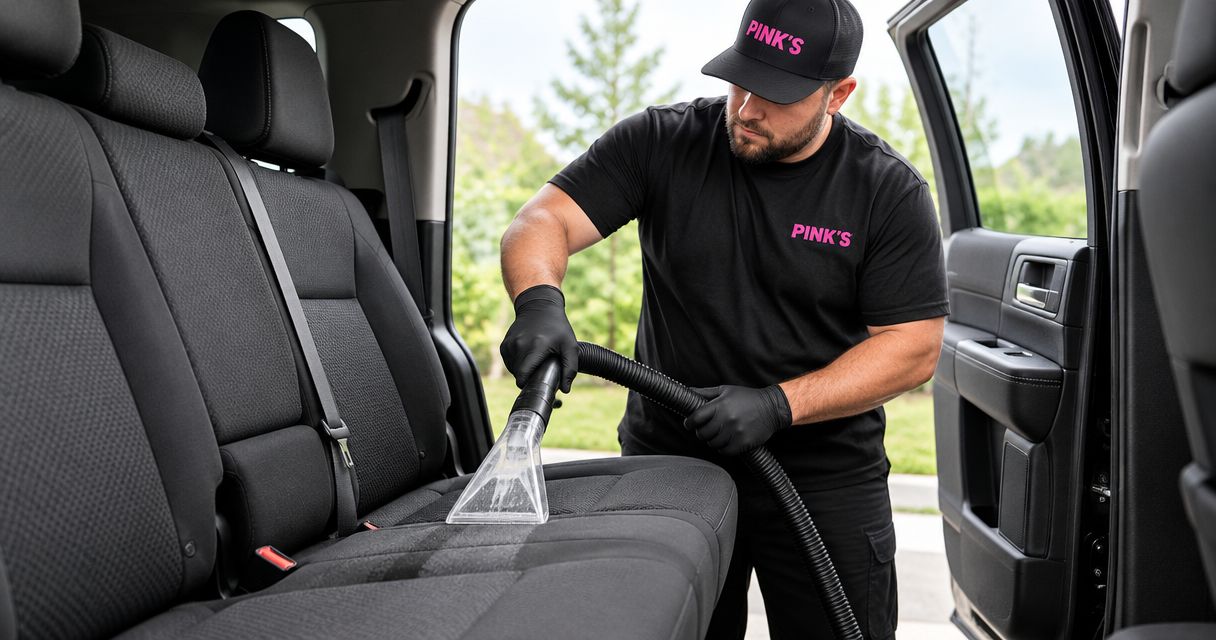
- Extraction cleaning needs airflow afterward; a dry-looking seat surface does not establish that the padding is dry.
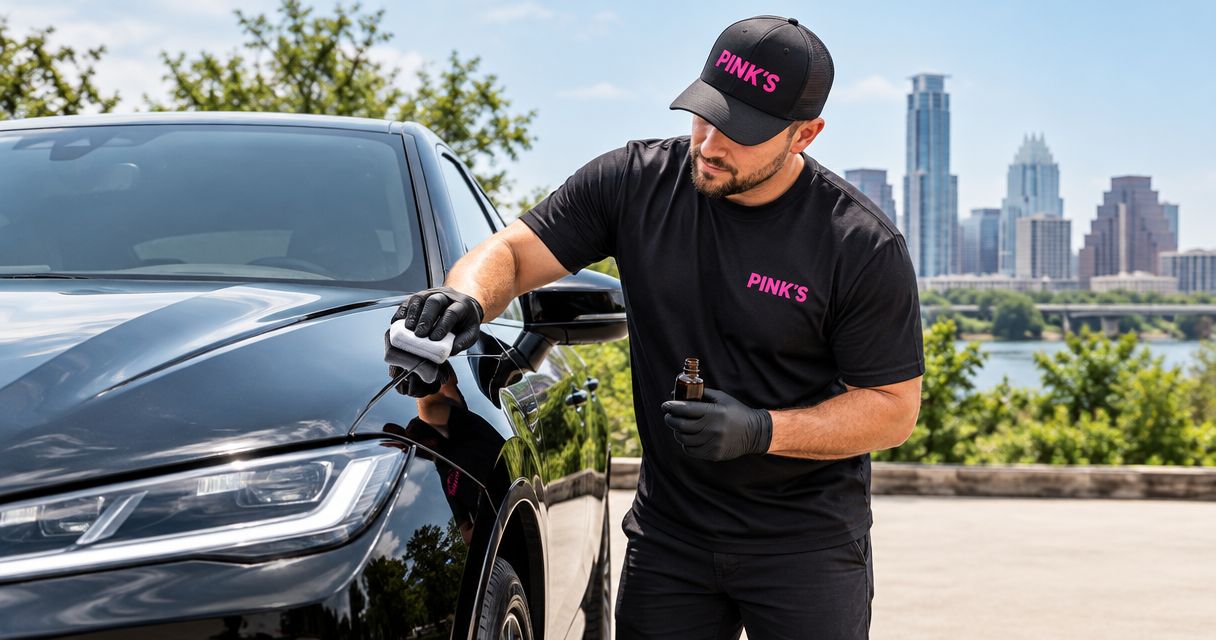
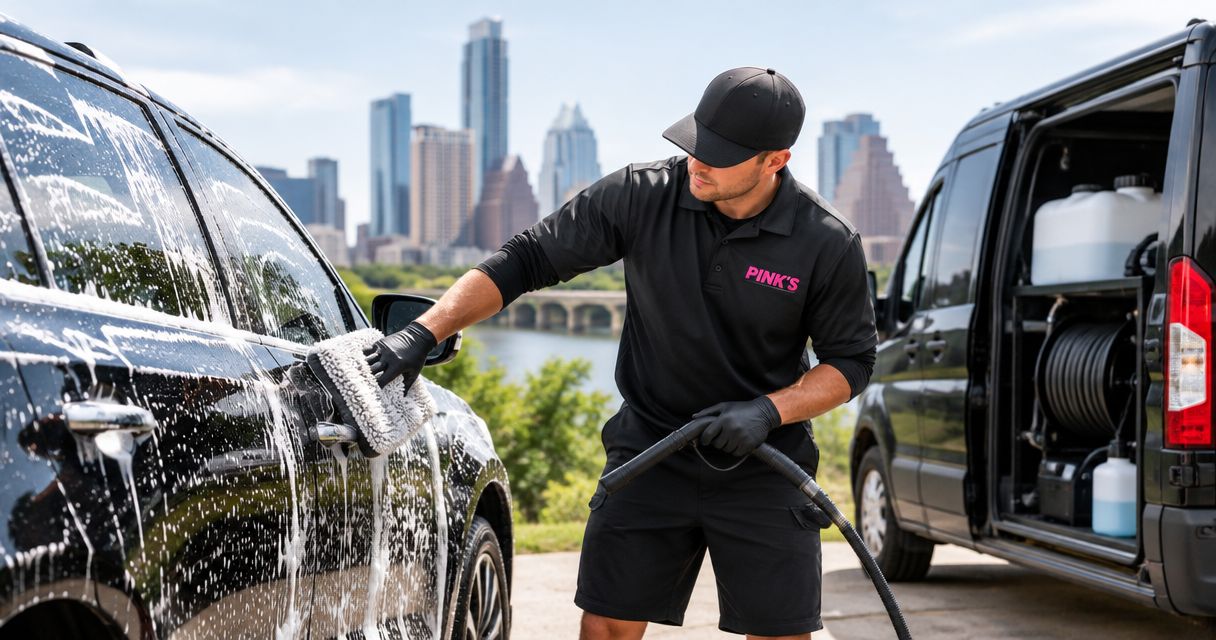
- Pink's Mobile Car Detailing suits Austin drivers booking interior cleaning at home or work without supplying water or power.
- Tell your detailer about your next drive before booking, especially when your family needs the cleaned seats immediately.
Why this matters
A clean seat is not automatically a usable seat. Sitting on damp upholstery can wet your clothing, and closing a damp interior without ventilation slows moisture removal. The practical question is whether your car will be ready for its next trip, not just whether the cleaning appointment fits your calendar.
For Austin drivers planning a 2026 appointment, separate service time from drying time. Pink's Mobile Car Detailing provides mobile detailing at homes, offices and apartments, but the convenience of on-site service does not eliminate the need to check wet upholstery afterward.
If you need the vehicle for school pickup, commuting or an evening errand, mention that deadline when booking. A useful conversation starts with your next departure time and the condition of the seats.
How long do car seats take to dry after upholstery cleaning?
Car seats take as long as needed for the moisture left by cleaning to evaporate; the appointment length alone cannot establish that time. Ask for an estimate based on your upholstery, the cleaning method and the conditions where the car will remain afterward. Treat that estimate as a planning aid, then check the seats before using them.
A 2–3-hour detailing appointment and a drying window answer different questions. The appointment describes time spent working on the vehicle; drying describes what happens to moisture remaining afterward. Confirm both when arranging your 2026 booking rather than assuming the seats will be dry at handoff.
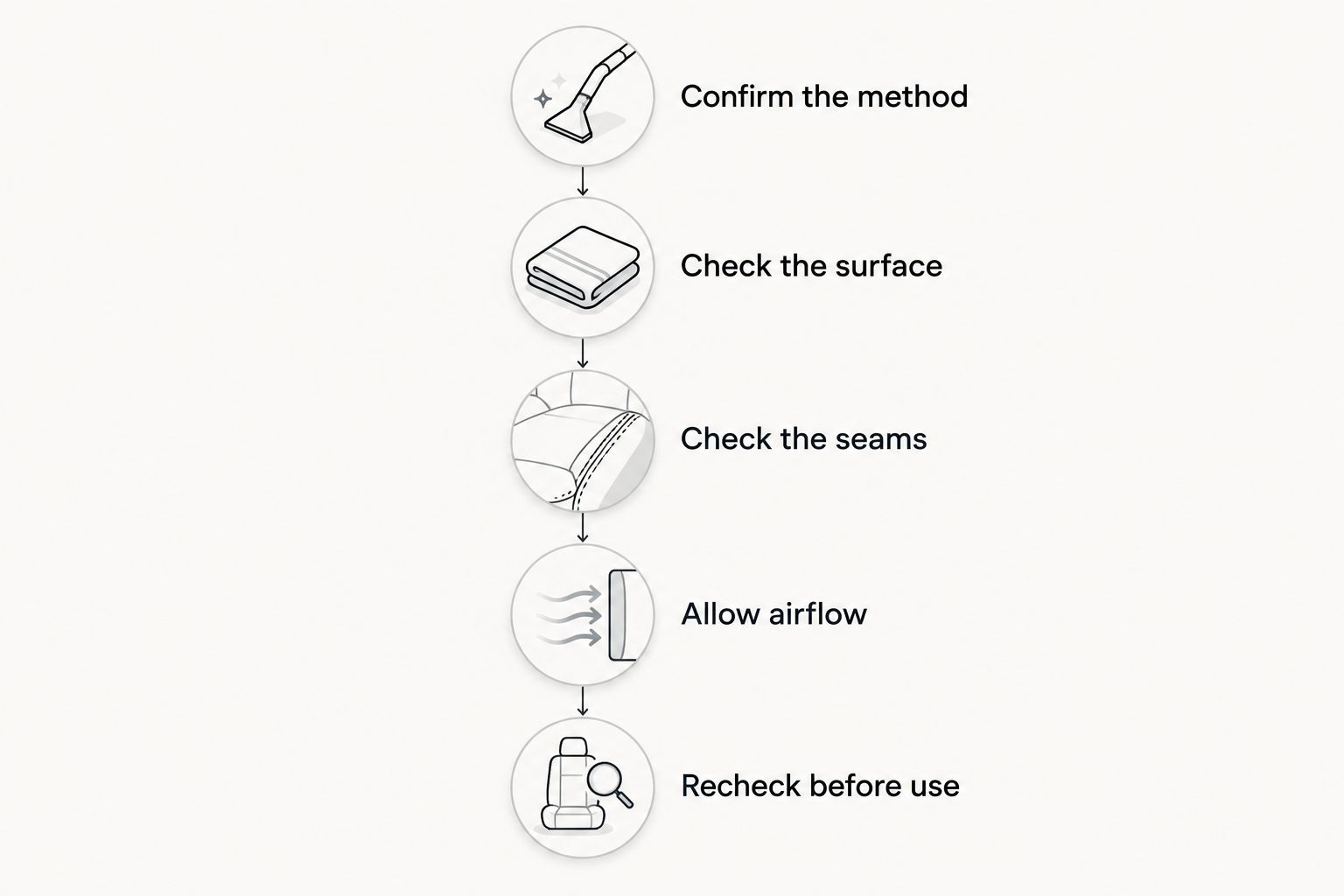
Use this sequence before putting the vehicle back into regular use:
- Confirm the method. Ask whether the seats received wet cleaning, extraction or a surface treatment. The amount and location of remaining moisture matter more than the name of the package.
- Check the surface. Press a clean, dry towel against the cleaned fabric. Moisture transfer means that area still needs drying.
- Check the seams. Inspect cushion edges, stitched channels and the junction between the seat base and backrest. Do not judge the whole seat from its easiest-to-reach panel.
- Allow airflow. Follow the detailer's ventilation instructions in a secure, permitted parking space. Do not leave the vehicle open and unattended.
- Recheck before use. Repeat the checks before seating passengers or replacing items that cover the cleaned upholstery. Persistent dampness deserves a call to the detailer.
A towel check is a practical surface check, not proof that every layer underneath is dry. If the surface dries but moisture returns when you press the cushion, give the seat more drying time and ask for guidance.
Drying expectations depend on the upholstery and cleaning method
The seat material changes what you need to inspect. Cloth upholstery can hold moisture beyond the visible surface, while a compatible surface clean on coated upholstery presents a different drying task. Neither observation establishes a fixed deadline for your particular vehicle.
Use the following comparison to decide what to ask, not to choose an aggressive cleaning method yourself. The vehicle manufacturer's care instructions take priority over generic upholstery advice.
| Upholstery or cleaning situation | Best for | Practical benefit | Limitation or drying check |
|---|---|---|---|
| Cloth seats receiving extraction cleaning | Drivers addressing dirt within fabric upholstery | Extraction removes cleaning liquid along with loosened soil | Remaining moisture needs drying; check seams and cushion edges |
| Cloth seats receiving limited spot cleaning | Drivers addressing a localized mark | Treatment focuses on the affected area | A small treated area can still remain damp; inspect the spot itself |
| Coated leather or vinyl receiving compatible surface cleaning | Drivers maintaining wipeable upholstery | Surface cleaning avoids treating the seat as absorbent cloth | Seams and perforations still need attention; avoid unnecessary saturation |
| Specialized upholstery requiring manufacturer-specific care | Drivers with material-specific cleaning restrictions | The care instructions guide a suitable treatment | A generic extraction or scrubbing routine is not appropriate for every material |
Ask the detailer which row describes your seat and what drying instructions apply. A fabric seat, a coated leather seat and a specialized trim material should not receive interchangeable advice.
Cloth seats after extraction cleaning
Cloth can feel dry on top while moisture remains in less exposed areas. Check the base, backrest, seams and cushion edges separately. A seat cover or bag placed on top can obstruct airflow, so leave the cleaned area uncovered while it finishes drying.
Extraction is a cleaning method, not a guarantee of instant dryness. Ask how the detailer will assess remaining moisture and what you should do after handoff.
Coated leather and vinyl after surface cleaning
Do not assume that advice for wet-cleaned cloth applies to coated leather or vinyl. Ask which care instructions apply to the material and whether any product needs time before the seat is used.
Inspect seams and perforations without soaking them further. Do not add more cleaner to solve a drying problem. Additional liquid creates another moisture-management task rather than establishing that the seat is ready.
Why car seat drying time varies
The useful drying factors are physical, not promotional. For your 2026 cleaning appointment, discuss these conditions before accepting a schedule that depends on immediate seat use:
- Cleaning method: A wet extraction treatment creates a different drying task from a light surface wipe. Ask what the job actually requires.
- Retained moisture: Liquid left in fabric, seams or padding must still leave the seat after cleaning stops. The detailer should explain the handoff condition.
- Air movement: Moving air supports evaporation. A closed, still interior does not offer the same drying conditions as a safely ventilated one.
- Humidity: Humid air slows evaporation compared with drier air under otherwise similar conditions. Do not treat an estimate from a different day as a promise.
- Seat construction: Thick padding, stitched channels and less exposed edges affect where moisture remains. Inspect each treated seat rather than checking only the driver's cushion.
- Parking conditions: A secure driveway, shared apartment lot and enclosed garage create different ventilation choices. Permission and safety determine what you can leave open.
Austin's weather does not make every appointment interchangeable. Check the conditions for your booking day and ask for instructions that fit the actual parking space. Avoid choosing a drying plan that requires leaving the vehicle unsecured.
Can I drive while my car seats are still damp?
Do not treat a damp seat as ready simply because you can sit on it. Confirm whether the driver's seat is dry and usable before departure. If a cleaned seating position is still damp, keep it out of use until the detailer advises that it is ready.
A towel over the seat is not a substitute for drying. It can protect clothing from contact temporarily, but it does not establish that the upholstery or padding is dry. Do not use blankets, covers or cushions to conceal moisture and then consider the job finished.
If you need to leave immediately, discuss that constraint before the cleaning begins. Changing the appointment is more practical than discovering at handoff that the seat you need is still wet.
Should I leave the windows open after upholstery cleaning?
Ventilate the vehicle only when the parking location, weather and security allow it. Ask your detailer how to support airflow without exposing the interior to rain or leaving the vehicle vulnerable. An open window is not useful if water can enter through it.
At an office or apartment, first check whether the property permits the proposed setup. Gates, shared spaces and unattended vehicles create access and security questions that a drying estimate cannot answer. In a garage, never run the engine to use the heater or ventilation system; carbon monoxide makes that unsafe.
Booking mobile upholstery cleaning around your day
Pink's Mobile Car Detailing is best for Austin drivers who want mobile interior cleaning at home or work without supplying water or power. The owner-operated service brings its own water and power and has no travel fee. Those logistics remove the need to arrange a shop drop-off, but they do not remove your responsibility to provide permitted access and plan for seat drying.
Pink's Mobile Car Detailing offers a $250 full-detail package for drivers who want interior and exterior detailing. Confirm the upholstery treatment included for your vehicle, the expected appointment length and any condition-specific work before booking. Do not assume that a package name promises removal of every old stain.
For a 2026 appointment, give the detailer these details upfront:
- Next departure: Say when you need to drive and which seats passengers will use.
- Seat condition: Describe spills, persistent odors and areas that already feel damp. Explain the problem instead of requesting a stronger chemical.
- Parking access: Identify the driveway, permitted office space or apartment parking area. Provide gate instructions and confirm property approval where required.
- Vehicle access: Explain how the detailer will reach the vehicle and how handoff will work. Keep valuables and personal items out of the work area.
- Drying location: Say where the car will remain after cleaning and whether safe ventilation is possible there.
The preparation guide calls for ten minutes of prep: clear personal items and cargo, remove child seats, reserve a level parking spot and sort gate access. Treat that as preparation guidance rather than a guarantee that every vehicle takes the same time. Reinstall child restraints according to their manufacturer's instructions once the seating area is ready.
Plan your Austin detailing appointment
Discuss seat condition, parking access and your next drive before booking mobile service.
FAQ
How long after car upholstery cleaning can I sit on the seats?
Use the cleaned seats once the fabric and accessible seams are dry and the detailer confirms they are ready. An appointment ending does not establish that wet-cleaned upholstery has finished drying.
Does a 2–3-hour detailing appointment include drying time?
A 2–3-hour detailing appointment does not by itself establish a seat-drying deadline. Confirm the work duration and expected seat condition at handoff separately when booking.
How can I tell whether my car seats are still wet?
Press a clean, dry towel against the fabric and inspect seams, cushion edges and the seat-base junction for moisture. A dry surface alone does not prove that deeper padding is dry.
Can I put seat covers back on after upholstery cleaning?
Wait until the cleaned upholstery is dry before replacing seat covers. Covers obstruct airflow and make it harder to inspect the fabric underneath.
Will car upholstery cleaning remove every old stain?
Car upholstery cleaning does not guarantee removal of every old stain. Discuss the mark and the upholstery material before treatment, and ask what improvement is realistic.
Can Pink's Mobile Car Detailing clean my car at an apartment?
Pink's Mobile Car Detailing provides mobile service at Austin apartments as well as homes and offices. Confirm property permission, parking access and a suitable working space before booking.
Does mobile detailing require my water or power?
Pink's Mobile Car Detailing brings its own water and power. You still need to arrange vehicle access and a permitted place for the service.
What should I do if the seats stay damp or smell musty?
Contact the detailer about persistent dampness or a musty smell after cleaning. Describe the affected area and follow the ventilation instructions rather than adding fragrance or covering the seat.
One last thing
Book backward from your next drive, not forward from the start of the appointment. A convenient arrival time is not convenient if your family needs a cleaned seat before it is ready.
Before confirming a 2026 appointment, ask: Will the seats I need be ready for my next trip, and what should I do if they are still damp? That question connects the cleaning method, parking conditions and your actual schedule without relying on an unsupported drying promise. Call 737-284-7407 to discuss those details before booking.